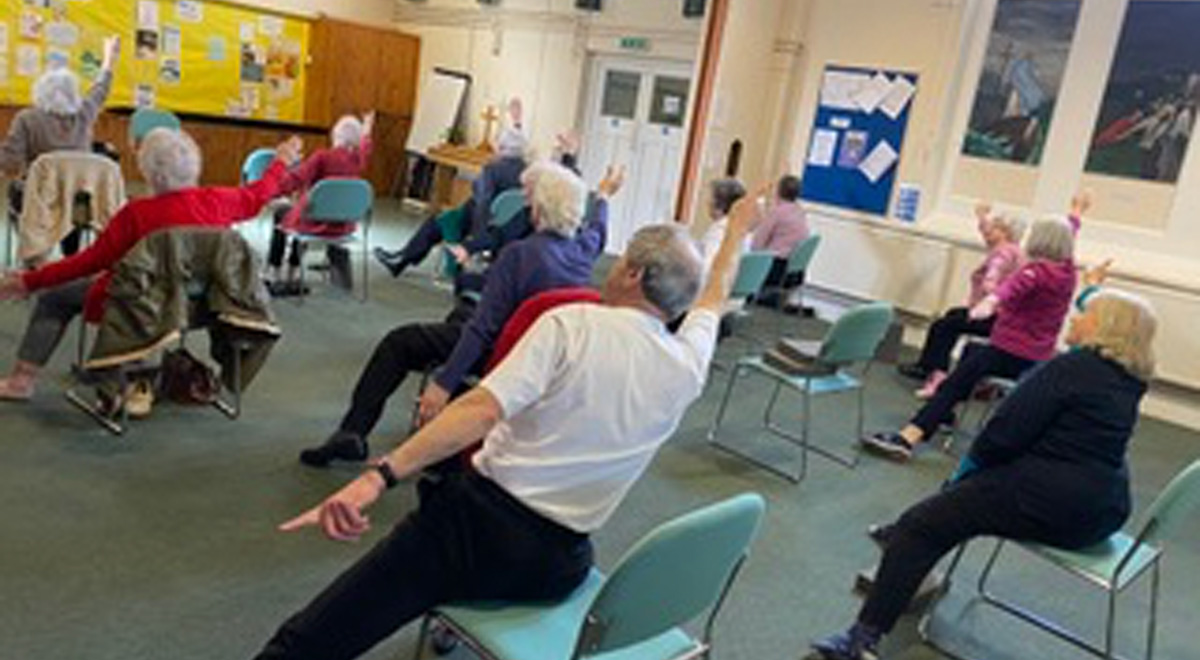
Let’s face it. We are all getting older. It’s life. It’s how we deal with it that makes the difference between enjoying and making the most of our body or giving in to the stiffness and achiness that comes with age. In this article, I explore the reasons and benefits of yoga for seniors.
Challenges
Our body faces many challenges as we get older: Our eyesight and hearing deteriorate; we are prone to arthritis, osteoporosis, heart conditions, stroke, high or low blood pressure; mental health issues; serious neurological conditions such as Parkinson’s, dementia. These are to name just a few, and everyone will be completely different as to what challenges they face and how they deal with them.
Even if we avoid all of these things, our body loses its full range of motion. This actually starts to happen when we are children between the ages of ten and puberty (link to Reasons to do Yoga). Sedentary lifestyles speed up the loss of flexibility.
But it’s not all doom and gloom! Age of course, brings wisdom. It also brings time to enjoy and appreciate the moment. And if you’re contemplating a new activity, yoga is fabulous, and as you get hooked, it can lead to a change of lifestyle.
Is Yoga Good for Seniors?
The beauty of yoga is that you can take it up at any time of life and there are so many different styles to choose from. It’s particularly good for seniors as it works on the following: balance, proprioception, co-ordination, strength, breath-work and mental health. It’s also a great way to socialise, make friends, create a new routine, and share laughter with like-minded people.
Benefits of Yoga for Seniors
Balance
In our senior years, our ability to balance often deteriorates, in part due to some of the medical issues mentioned above. We walk differently as we get older, our circulation slows down and we are prone to issues such as vertigo. * Therefore, maintaining good balance is crucial to prevent us from falling.
In yoga, we work on building our strength to support our balance, such as working the feet and ankles. You get to build up your confidence in balance, sometimes using the wall or a chair to support you. There are a variety of balancing positions that we work on and these can also be practiced at home. You will probably surprise yourself with how quickly your ability to balance can return.
Proprioception
This is the body’s ability to sense its location, movement, and actions. Proprioceptors are located all over the body, and they tell the body what it’s doing, so the body can automatically respond to any given situation. For example, if you are walking on an uneven service, your body will automatically right itself if it starts to wobble. Or if you are filling a shopping bag, your body adjusts itself to carrying the heavier load.
In yoga, we create poses and movement that gently challenge the body and tune it so that you become more confident in your proprioception.
Co-ordination
In yoga you are encouraged to focus on your body and to think about muscles and movement that you don’t normally consider in day-to-day activities. Co-ordination is something that we can lose quite easily, particularly if you have an underlying medical condition that contributes to this. But the good thing is that in yoga, we can re-gain co-ordination quite quicky, or at least improve it.
Strength
We lose bone density and muscle strength as we get older. Weight bearing poses and movement work on all over body strength i.e. standing poses, as well as poses focusing on specific parts of the anatomy, such as the core.
Breath-work
As we get older, our breath often becomes shallow. Our posture is poor, causing us to slump, restricting the flow of breath through the body. Some people are also prone to conditions such as asthma and chronic obstructive pulmonary disease (COPD).
In yoga, we undertake breathing exercises, allowing us to use the full capacity of our lungs and diaphragm. Just by maintaining a good posture, we are giving our bodies room to breathe fully.
Breathing is a powerful tool in helping us to calm down and relax, both physically and mentally.
Mental Health
Thinking about past or future events induces stress and anxiety. In yoga, you are encouraged to focus on your body, mind, and breath. By doing this, you stay in the present moment, calming the mind and reducing stress levels. Yoga is known to lower cortisol levels, the hormone associated with stress. This is especially true of Restorative Yoga, https://www.elliestaffordyoga.co.uk/is-restorative-yoga-good-for-you/.
Other reasons
A regular yoga class creates a routine, important if you need structure to your week. It is a great way of meeting new people in an environment where you already have common ground. Laughter is important, particularly if you live alone. At Ellie Stafford Yoga, the seated yoga class is a light-hearted class with participants of all ages, and laughter is a valuable tool to raise serotonin levels and reduce stress.
Combining yoga into a routine with other forms of exercise such as a daily walk is beneficial to seniors and helps to keep joints moving and lower back pain at bay.
Consistency is important in order to gain results and see improvements in flexibility and all of the above factors. Over the weeks, you will feel differently, but if you miss a week or two, progress is halted and even reversed. Therefore, it is important not to get disheartened, as you will learn to reap the benefits and know it will not take long to regain the fitness levels you achieved.
Is Yoga Safe for Seniors?
Like any activity, there are different levels of difficulty within yoga. Even if in your youth, you considered yourself relatively fit, your joints may not now forgive you for attempting to undertake a Vinyasa Flow yoga class, where you are moving up and down the mat constantly. Not only this, but you may immediately get disheartened. It is better to speak to your yoga teacher, to recommend a class that may be safer and more accessible. There are gentle forms of yoga to choose from. See below. However, if you are already fit, a Vinyasa Flow class is ideal!
An experienced yoga teacher can offer modifications and props for all physical yoga poses. And if a mat-based class is not accessible to you, there is always the option of a seated yoga class – see below.
As with any form of exercise, it is best to speak to a medical professional before attempting anything new.
Which yoga is best for seniors?
There are no hard and fast rules here. If you’ve been doing yoga for decades, you’re already pretty comfortable in the type of yoga you are following. You will also probably identify when you want to switch the style of yoga that you are following, possibly to a gentler format if you need one that is kinder on your joints.
If you are completely new to yoga, you may want a gentle form of yoga, which is slower and kinder on the joints. The following styles of yoga are available at Ellie Stafford Yoga:
Seated Yoga / Seated Fitness and Fun
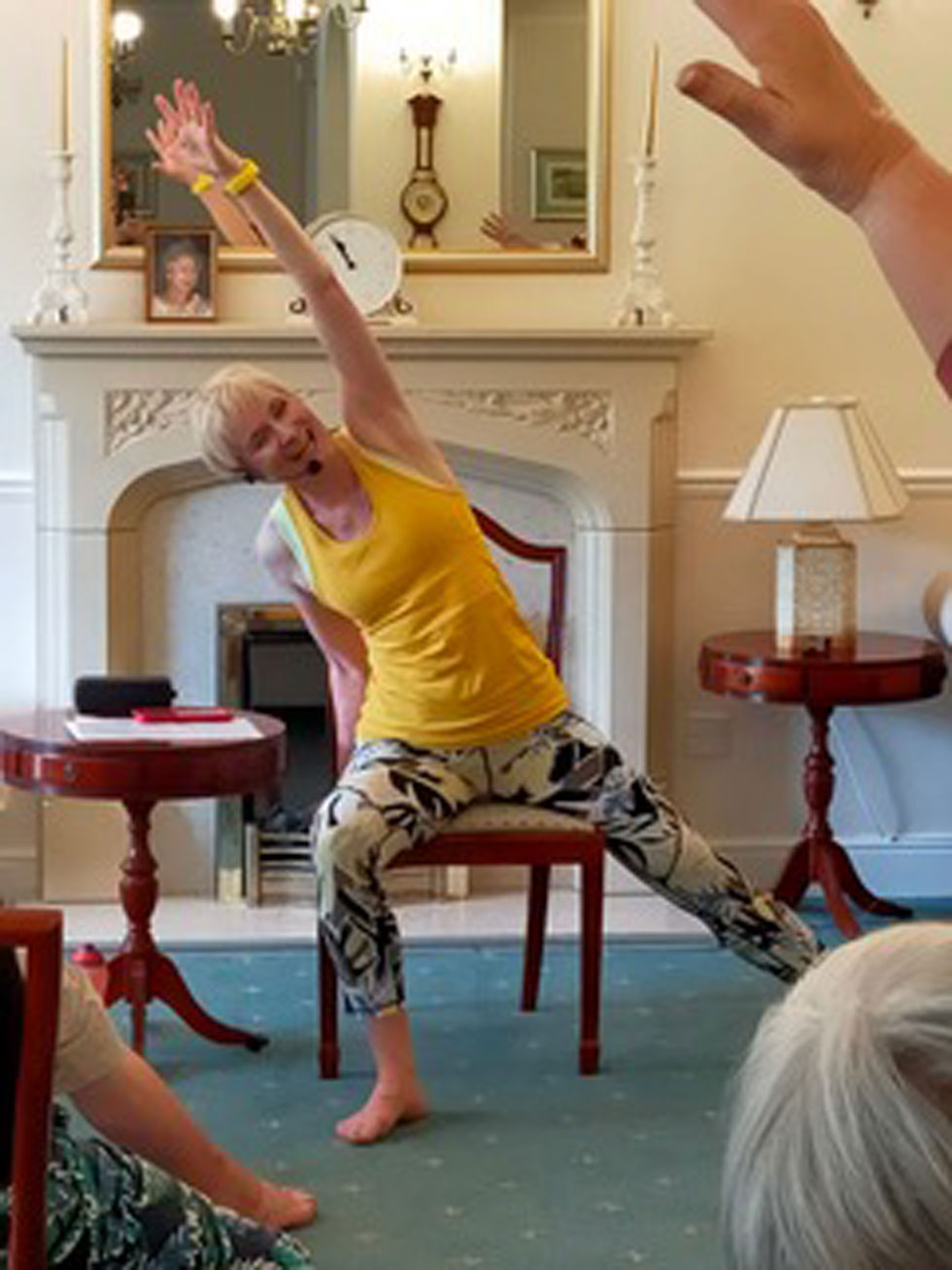
An exercise class to help you improve your flexibility, balance, strength, and co-ordination. The class is seated in a chair and an option is given to come out of the chair for part of the class, using it for support. Yoga inspired movement using the breath to help guide us in and out of poses. Classes begin and end with mindfulness to calm and soothe the mind and body. In-between, expect some laughter and music!
This class is a great way of experiencing the physical and mental benefits of yoga, but in a light-hearted way. We come together to make friends and share laughter, whilst working to the level that suits us as individuals.
See https://www.elliestaffordyoga.co.uk/classes-workshops/ for further details and https://www.elliestaffordyoga.co.uk/timetable/ for live class timetable.
Gentle Stretch and Restore
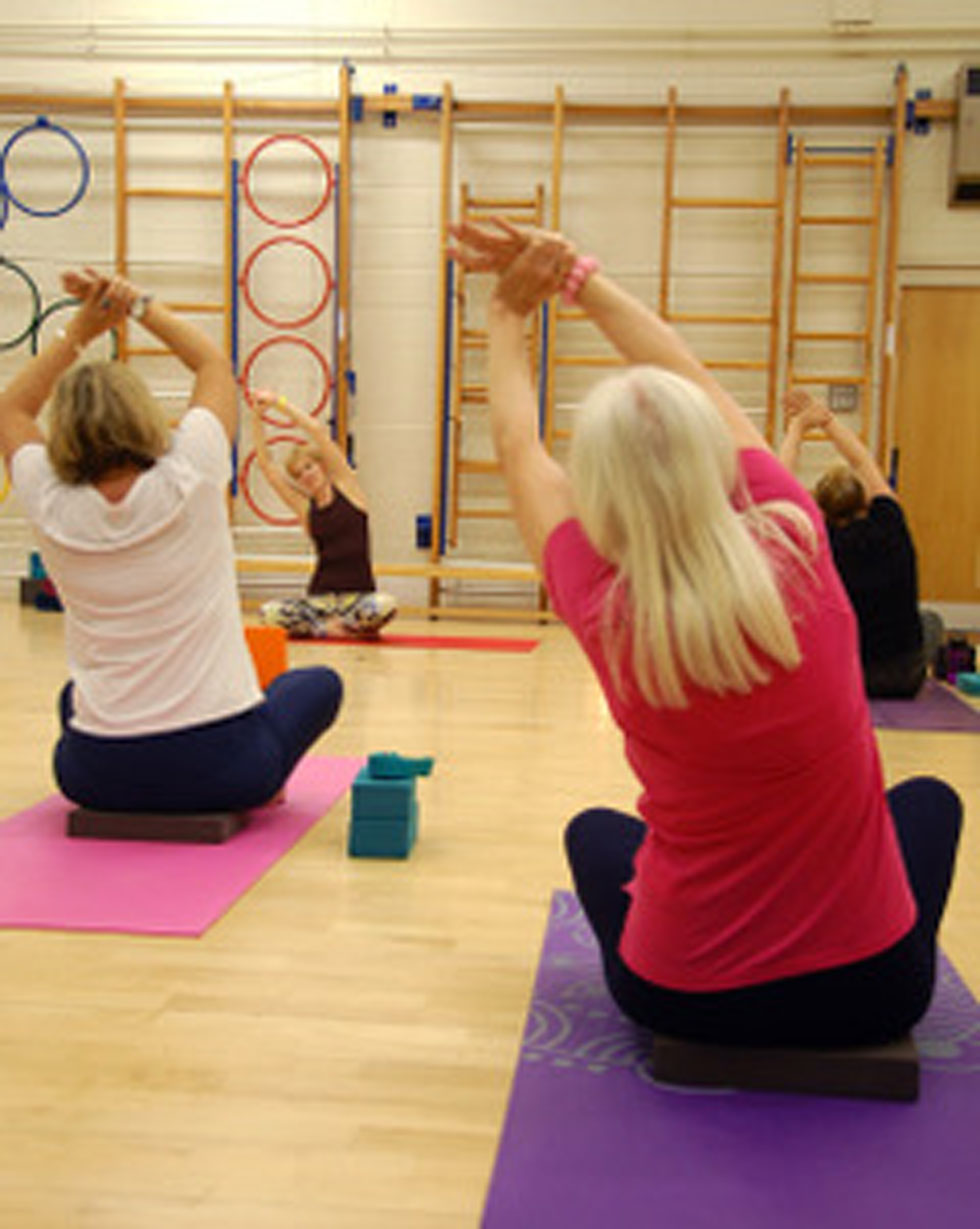
This is a very gentle, mat-based class. Its starts and finishes with a long restorative pose, supported with props. The emphasis is on improving and maintaining flexibility, balance, strength, and co-ordination. Static poses are mixed with slow movement. Breath and mindfulness are weaved into the practice.
See https://www.elliestaffordyoga.co.uk/classes-workshops/ for further details and https://www.elliestaffordyoga.co.uk/timetable/ for live class timetable.
Restorative Yoga
Restorative Yoga is a completely passive form of yoga offering you the opportunity to give yourself permission to rest in deep relaxation for the whole class. It is a mat-based class. There are only a handful of poses which are held for a length of time to allow your body to open and release tension. A calm and restful environment is provided to allow you to feel safe and ready to unwind. Professional yoga props including bolsters, blankets and eye pillows are all provided to make you as comfortable as possible. We use breath work to aid the release of stress and tension.
Restorative Yoga is safe to practice with injuries. It is non weight bearing and your body is completely supported by props such as bolsters, blankets, and bricks. It is also stationary. Therefore, you are not creating any impact to exacerbate injuries: https://www.elliestaffordyoga.co.uk/is-restorative-yoga-good-for-you/.
See https://www.elliestaffordyoga.co.uk/classes-workshops/ for further details and https://www.elliestaffordyoga.co.uk/timetable/ for live class timetable.
Gentle Hatha
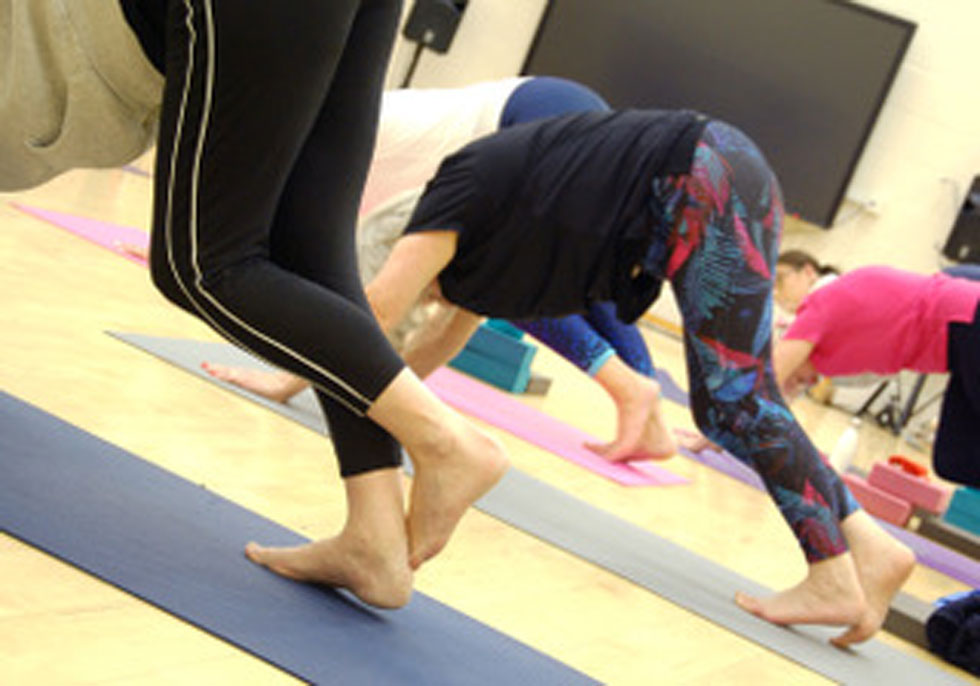
This is a gentle, mat based class. There is some movement up and down the mat, mixed with more static holds. This is a more strenuous class than Gentle Stretch & Restore. It is suitable for a more experienced senior yoga student.
See https://www.elliestaffordyoga.co.uk/classes-workshops/ for further details and https://www.elliestaffordyoga.co.uk/timetable/ for live class timetable.
Vinyasa Flow
This is a dynamic form of yoga, where you move up and down the mat constantly. It is suitable for any senior already experienced in their yoga practice. Caution is required if you have any medical issues, such as high or low blood pressure.
See https://www.elliestaffordyoga.co.uk/classes-workshops/ for further details and https://www.elliestaffordyoga.co.uk/timetable/ for live class timetable.
Poses to try at home
Cat / cow
Mat-based variation – Come on to all fours, with knees on the ground. Stick your tailbone out, push the bellybutton towards the ground and look up, whilst slowly breathing in (cow). Then, as you breath slowly out, tuck your tailbone in and arch your back (cat). This takes your spine into extension and flexion and is great for creating movement in your spine, particularly if you have been seated or performing an activity where you are hunched over something. Repeat this slowly as many times as you wish.
Chair based variation – In an upright chair, sit halfway along, so that you are not leaning back. Sitting tall, open your arms out wide, and as you breath in, push your chest out and take your arms back, tilting your chin to look up. As you breath out, look down, bring arms forward, interlace your fingers and arch you back. Repeat this slowly as many times as you wish.
Standing on one leg
Stand in front of the kitchen counter, facing the counter. Place hands on your hips. Soften your knees and focus on a spot or fixture in front of you. Shift your weight onto your right foot and raise your left foot off the ground. If it is too difficult to raise the foot, leave the big toe touching the ground. If you lose your balance, grab the counter with a hand.
Tip – press down on the big toe of the standing foot, to stop the foot from rolling outwards. Don’t be tempted to hold the breath, as this will make you wobble! Breath slowly in and out of the nose.
Repeat the exercise on the left foot. Then repeat on both sides at least three times. It will get easier with each repetition. If you repeat this exercise daily, your confidence with balance will improve. Try to resist the temptation to grab the counter when you don’t need to.
Is it ever too old to start yoga?
Absolutely not! At Ellie Stafford Yoga, I have had the pleasure of introducing newbies as young as in their nineties to yoga. Contact Ellie to discuss your requirements and for recommendations as to which class/classes to try.
If you have any mobility issues, we can discuss the most suitable class to meet your requirements.
All classes are inclusive, and modifications are offered to all poses.
At Ellie Stafford Yoga, we focus on what you can do in yoga, not what you can’t do.
See the following articles for further information and inspiration to start your yoga journey:
https://www.elliestaffordyoga.co.uk/reasons-to-do-yoga/
https://www.elliestaffordyoga.co.uk/a-beginners-guide-to-yoga/

Ellie Stafford is an advanced 500hours yoga teacher registered with Yoga Alliance**.
She is also a qualified Restorative Yoga teacher.
* https://www.webmd.com/healthy-aging/what-causes-balance-issues-in-older-adults