Yoga, a practice shrouded in myths, often deters many from experiencing its profound benefits. In our post “7 Myths about Yoga,” we debunk common misconceptions, from the belief that flexibility is a prerequisite, to the notion that yoga can’t aid in weight loss, is gender-specific, too gentle, or solely for the young. We aim to clarify that yoga is diverse and accessible to all, regardless of age, gender, or physical ability. Join us as we explore the truth behind these myths, emphasising yoga’s universal appeal and its capacity to transform both body and mind.
1. I have to be flexible to do yoga
This is possibly the biggest misconception about yoga and a comment I hear frequently.
We are built in all shapes and sizes and lead very different lifestyles, often sedentary, which ultimately means that most of us lose much of our flexibility over time. Our bodies adapt to our lifestyle and lose the full range of motion that we were born with. Children start to lose their flexibility around the age of ten to puberty, as the muscles develop and bones harden. A sedentary lifestyle, even in children, speeds up the loss of flexibility.
Yoga is a fabulous way of regaining some of that flexibility and the less flexible you are, the more likely you are to see some improvement over the weeks and months, as your body regains a fuller range of motion. Yes, there is always going to be at least one bendy person in class, but that’s because they have either been doing yoga a long time or they have a background such as gymnastics or dance. Most of us in class will feel the same way as you.
It will only take approximately five to six weeks of consistent practice to start to feel and see results, but it all depends on how old you are, how much mobility you started with and how often you practice. So, the more you practice, and do so consistently, the quicker you will benefit from it.
If you’re not flexible, yoga is definitely for you!
2. I won’t be any good at yoga
The wonderful thing about yoga is that it is not a competitive sport. Ingrained into yoga philosophy is the letting go of attachment to the way we think a pose should look like. Instead, we focus on a version that achieves the best results for us as an individual.
Choosing a class that you feel comfortable in is important, and gaining confidence in the yoga teacher, who will advise you on the best class to start with.
Yoga is so accessible, and if getting up and down from the floor is not possible, you can do a seated yoga class.
The hardest part is turning up for the first class. This can be pretty daunting. The next hardest part is the second class. After that, you may find yourself purchasing your first yoga mat!
In yoga, we celebrate what you can do, not what you can’t do.
3. Yoga won’t help me lose weight
Yoga is a safe, low-impact form of exercise and most forms of yoga will help you tone your body.
Whilst yoga isn’t traditionally associated with aerobic exercise, which leads to calorie burning, there are forms of yoga which are more cardiovascular than others and therefore do contribute to weight loss.
Vinyasa Flow is a dynamic form of yoga, and the heart rate increases as the movement is continuous. All classes are different, and the intensity can be increased by each individual in class if they choose to do so. There are often twists in the routine, which are a great way of aiding digestion, as the internal organs are compressed.
Gentle Hatha is a slower version of yoga and the rate of calorie burning will be less, even though all the poses are the same, including twists. However, you are still activating and stimulating your body, so there will always be a certain amount of calorie burning.
Restorative Yoga is a completely passive form of yoga. However, it has been proven that you can still burn calories, as it is linked to a decrease in the stress hormone cortisol: https://www.elliestaffordyoga.co.uk/does-restorative-yoga-burn-calories/.
The good news is that the reduction in cortisol levels applies to all yoga classes due to the mindfulness and meditation in class, which leave your body relaxed.
4. I’m too old to do yoga
The beauty of yoga is that you can take it up at any time of life and there are so many different styles to choose from.
It’s particularly good for seniors as it works on the following: balance, proprioception, co-ordination, strength, breath-work and mental health. It’s also a great way to socialise, make friends, create a new routine, and share laughter with like-minded people.
Finding the right class for you is important, as you don’t want to get disheartened if you start with the wrong one. You may want to find a class which has a high proportion of older people, if this is likely to give you more confidence.
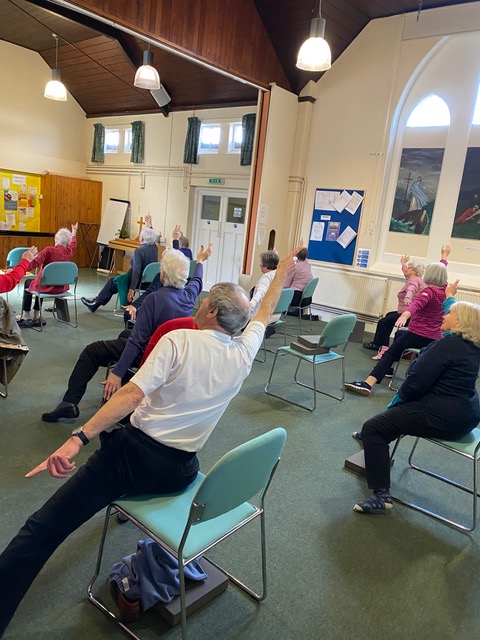
You also need to be honest with yourself. If you find it tricky to get up and down freely from the floor, you may want to consider a seated yoga class, which uses a chair to support you. A seated yoga class can often be more challenging than you think!
For further information: https://www.elliestaffordyoga.co.uk/why-yoga-for-seniors/
5. Only women do yoga
Okay, so the majority of yogis in classes are women. However, there is an increasing number of men attending classes as the physical and mental benefits become more widely known.
A yoga teacher frequently invites us to leave our ego outside of the door, as yoga is not a competition. Women can be just as inflexible as men. There’s no use comparing ourselves to the person on the mat next to us – we have no idea what background or experience they have. Chances are, they are just as self-conscious as you are, male or female.
Picking the style of class you go to will make a big difference. Doing some research and decide if you want a really slow, gentle class or a dynamic, fitness-oriented class.
Just turning up is the biggest hurdle.
6. Yoga is too gentle and easy
This is usually said by someone who has never tried yoga!
However, this expression is like saying driving is too easy. Driving a small automatic car is a lot different to racing in Formula 1 or driving a lorry. You need to learn to drive before you can or want to go any further.
There are many different styles of yoga, from static and restorative yoga to a dynamic and powerful Vinyasa flow.
And if you do just want to be in a yoga practice, rather than be doing, there are classes which enable you to do that, such as restorative or yin. These practices are an antidote to busy and active lifestyles.
7. All yoga is the same
While yoga poses are indeed the same, regardless of the format of the class, no two yoga classes are the same. There are many different styles of yoga, and the teacher will interpret each style differently.
You can have a dynamic, fast moving Vinyassa Flow class, or a class in which you remain completely still, such as Restorative or Yin yoga.
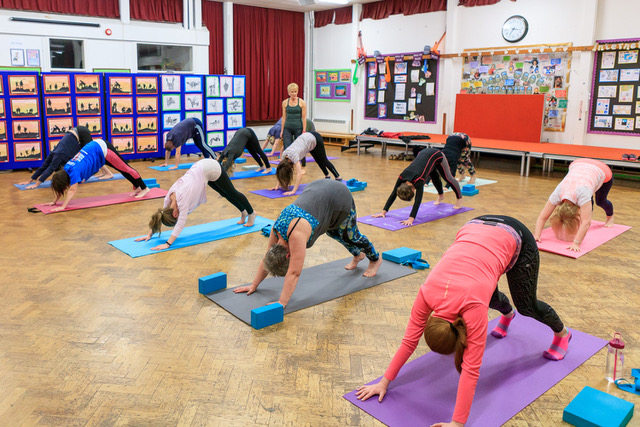
There is an advantage to becoming familiar with certain common poses, such as Downward Facing Dog. It allows you to go deeper into a pose and become more reflective, aiming to get the best out of a pose each time. A familiar pose will feel different each time you do it.
Yoga is only the same if you are not present in your practice, i.e., if your mind is elsewhere and you are not thinking about or connecting with what you are doing.
You are always learning and surprising yourself in yoga. If this appeals to you, it’s just a matter of finding the right class and teacher for you.
FInd a yoga class: www.elliestaffordyoga.co.uk/timetable/.

Ellie Stafford
500hours Advanced Yoga and Restorative Yoga Teacher
Registered Yoga Alliance